Battery storage
Home battery storage for California homes
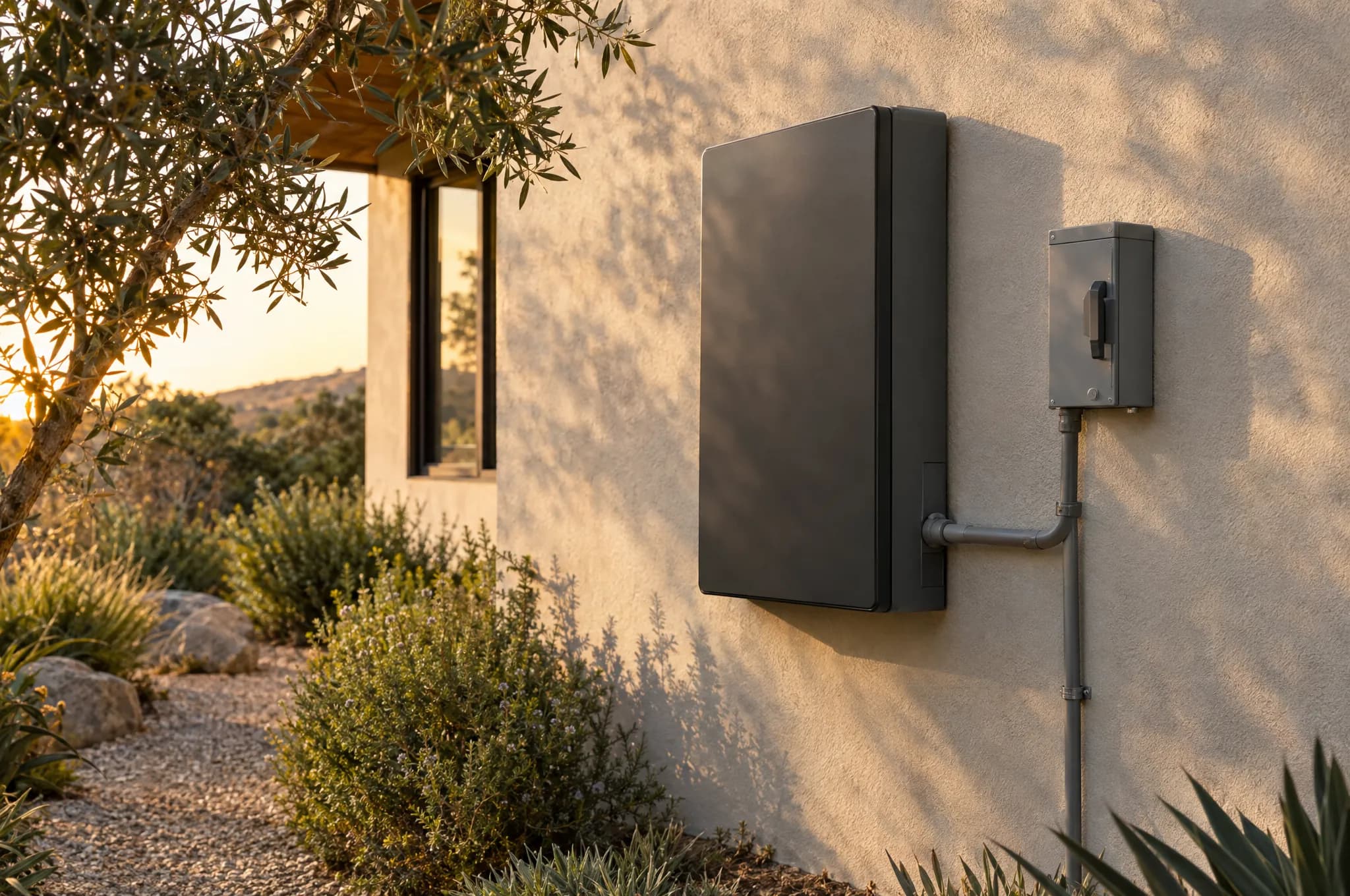
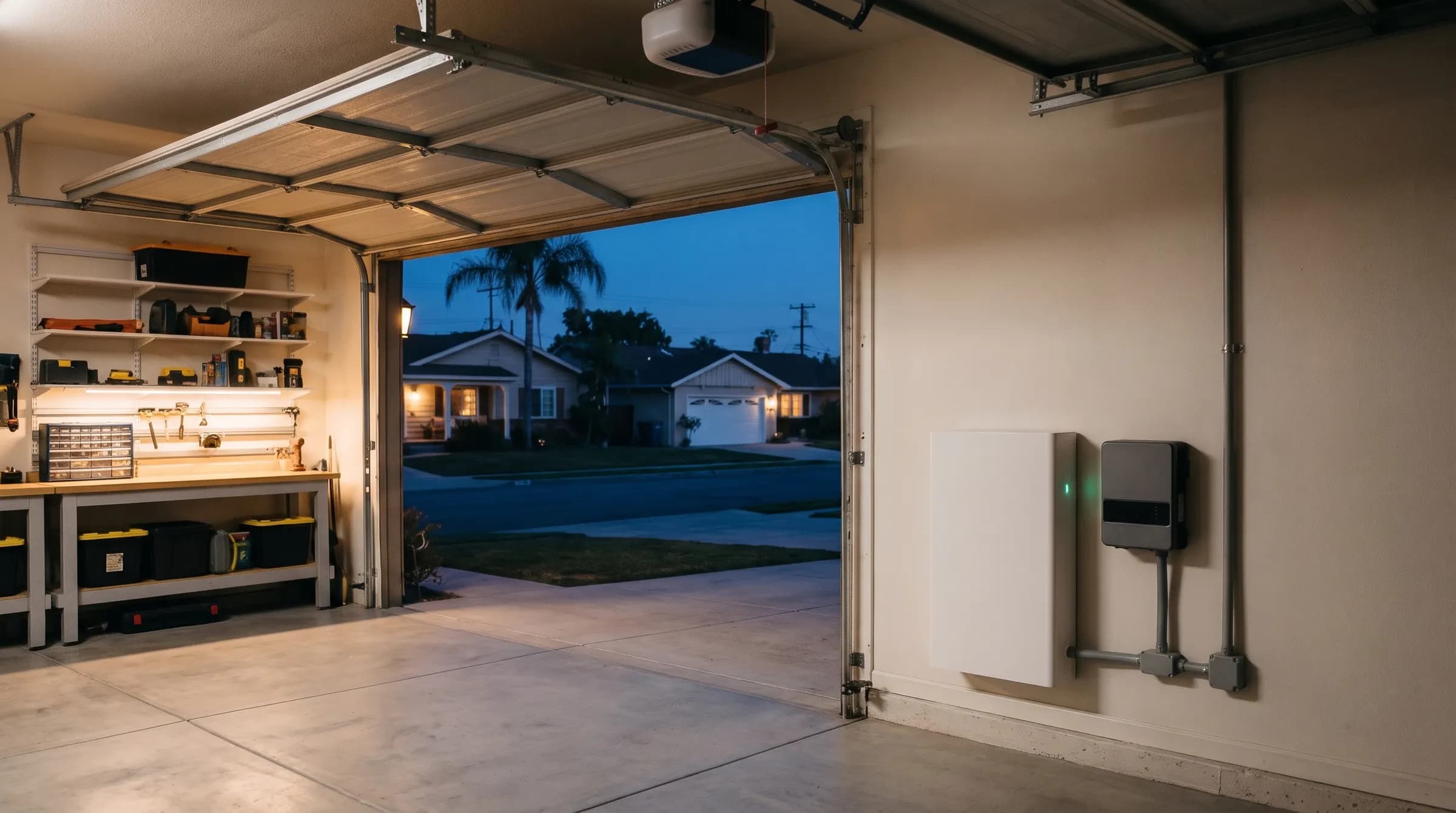
Store midday solar for the expensive 4–9 PM peak, with backup power during outages. Under NEM 3.0, a battery is the difference between selling your solar cheaply and using it when power costs the most.
Free bill review · No obligation · Designed and installed by our own crew
Why a battery
A day with solar and a battery
Under California's Net Billing Tariff (NEM 3.0), the solar you send to the grid is credited at much lower rates than before, roughly 75% less than under NEM 2.0. A battery keeps that power for the hours when it's worth the most.
 Morning
Panels wake up
Power starts flowing as soon as the light hits the roof.
 Midday
The battery charges
Your roof makes the most power. What your home doesn't use right away fills the battery.
 4–9 PM
The battery takes over
Power costs the most now, so your home runs on the sun you saved instead of the grid.
 Night
Backup if the grid goes down
If the power goes out, the battery keeps the circuits it's connected to running.
Why the evening matters: time-of-use rates explained
Backup when the grid goes down
A battery provides backup power during outages and Public Safety Power Shutoffs. How much it can run, and for how long, depends on its size and which circuits it's set up to power; we'll talk through what you want to keep running.
Sized from your bill
Your usage history shows how much power you use and when. We size the battery to your evenings and the panels to your year, so the two work together.
Battery or generator?
A generator only helps in an outage and needs fuel. A battery works every day, cutting your evening bill, and backs you up silently when the power goes out.
Compare them side by side: solar battery backup vs. a generator
Incentives
Battery incentives right now
SGIP is limited. As of late 2026, the Self-Generation Incentive Program's ratepayer budgets are closed to new applicants, and the state-funded Residential Solar and Storage Equity budget, for income-qualified households, has a waitlist (per SCE's SGIP page). We'll check what's open for you when you apply.
The property tax exclusion ends soon. California's solar property tax exclusion, which also covers a solar system's battery, applies only to systems that qualify before January 1, 2027. What changes in 2027
FAQ
Home battery questions
Under NEM 3.0, a battery is strongly recommended. Without one, the midday solar you send to the grid earns very little. A battery stores that energy so you can use it when electricity is most expensive, and it gives you backup power during outages and Public Safety Power Shutoffs (PSPS).
During the 4–9 PM peak, when time-of-use rates are highest. The battery charges from your panels at midday and powers your home through the evening, instead of you buying grid power at peak prices.
It keeps power flowing to the circuits it's connected to during outages and Public Safety Power Shutoffs. How long it lasts depends on the battery's size and what you run, and with solar it can often recharge the next day.
It depends on how much power you use in the evening and what you want backed up in an outage. Your bill's usage history tells us most of it; we size the battery and the panels together.
They do different jobs. A battery works every day: it charges from your panels, cuts your evening bill and backs you up in an outage, silently and without fuel. A generator only helps during an outage.
Battery rebates through SGIP, the Self-Generation Incentive Program, are limited right now: as of late 2026 its ratepayer budgets are closed to new applicants and the state-funded income-qualified budget has a waitlist. We'll check what's open for you when you apply.

Free savings estimate
See how much you could save
Get a free, personalized savings estimate for your home. No commitment, no pressure, just real numbers.