How to Read Your California Electric Bill (With a Real 2026 Example)
A real 2026 California electric bill, line by line: your new charges, the kWh you used, your true price per kWh, the usage chart, tiers and fixed charges.
Most of what you need to decide on solar is already printed on your electric bill. Here's how to read it, using a real bill from September 2026: a Southern California home on a standard residential rate, with no discounts.
1. Find Your New Charges
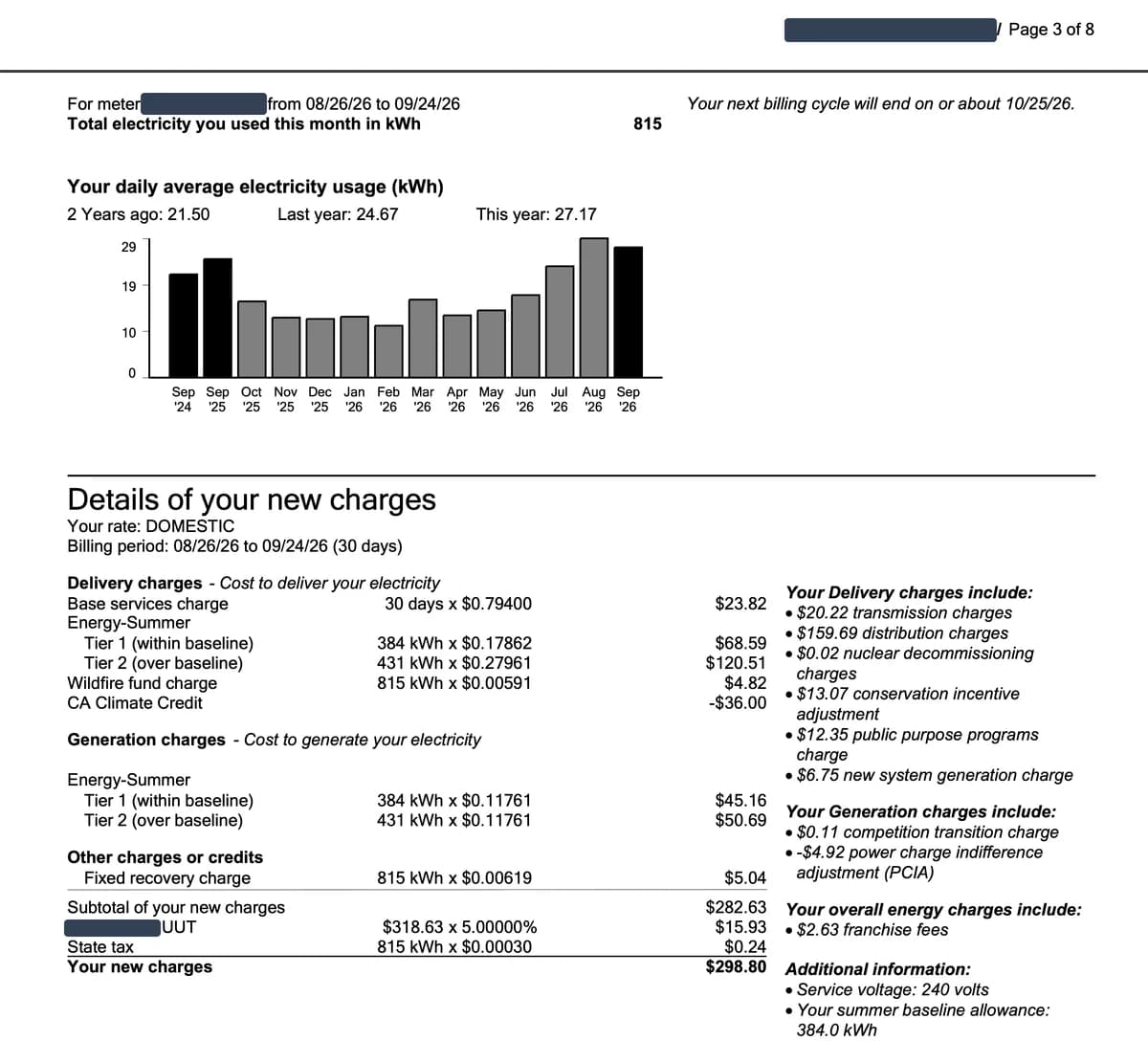
Your new charges are everything billed for this period: the energy you used plus fixed charges, taxes and fees. On this bill: $298.80 for 30 days.
2. Find the kWh You Used
Look for the line with your total electricity used this month. This home used 815 kWh in 30 days, which the bill also shows as a daily average: 27.17 kWh a day.
3. Work Out Your Real Price per kWh
Divide the new charges by the kWh: $298.80 ÷ 815 kWh = 36.7¢ per kWh. That all-in number is what each kWh really costs you, fixed charges included, and it's the number solar competes with. It's usually higher than any single price printed on the bill.
4. Read the Usage Chart
The usage chart shows your daily average month by month, often for two years. This home used about 29 kWh a day in August 2026 and about 11 in February: summer air conditioning more than doubled its use. A solar system has to be sized for the whole year, not one month, which is why the chart matters more than any single bill.
5. Check Your Rate Plan and Tiers
This bill is on a tiered rate: a baseline amount of power at a lower price, and a higher Tier 2 price beyond it. This home went past its baseline, so 431 of its 815 kWh were billed at Tier 2. Time-of-use plans price by the hour instead, with the highest prices in the evening peak (4–9 PM on the most common plans). Read more in time-of-use rates explained.
6. Look for Fixed Charges
Since late 2025 (SCE and SDG&E) and March 2026 (PG&E), bills from California's three big utilities include a base services charge of about $24 a month for most customers, with lower amounts for CARE and FERA households. It's billed no matter how much power you use, so solar can lower the rest of your bill but not this part.
What This Means for Solar
Three numbers drive a solar estimate: your yearly usage (from the chart), your real price per kWh, and when you use power. A system sized from them covers your own use; a home battery shifts midday solar into the evening peak, when power costs the most.
Bills look different from utility to utility, but every California bill shows these same basics. Want us to read yours? Get a free bill review or check if you qualify.